
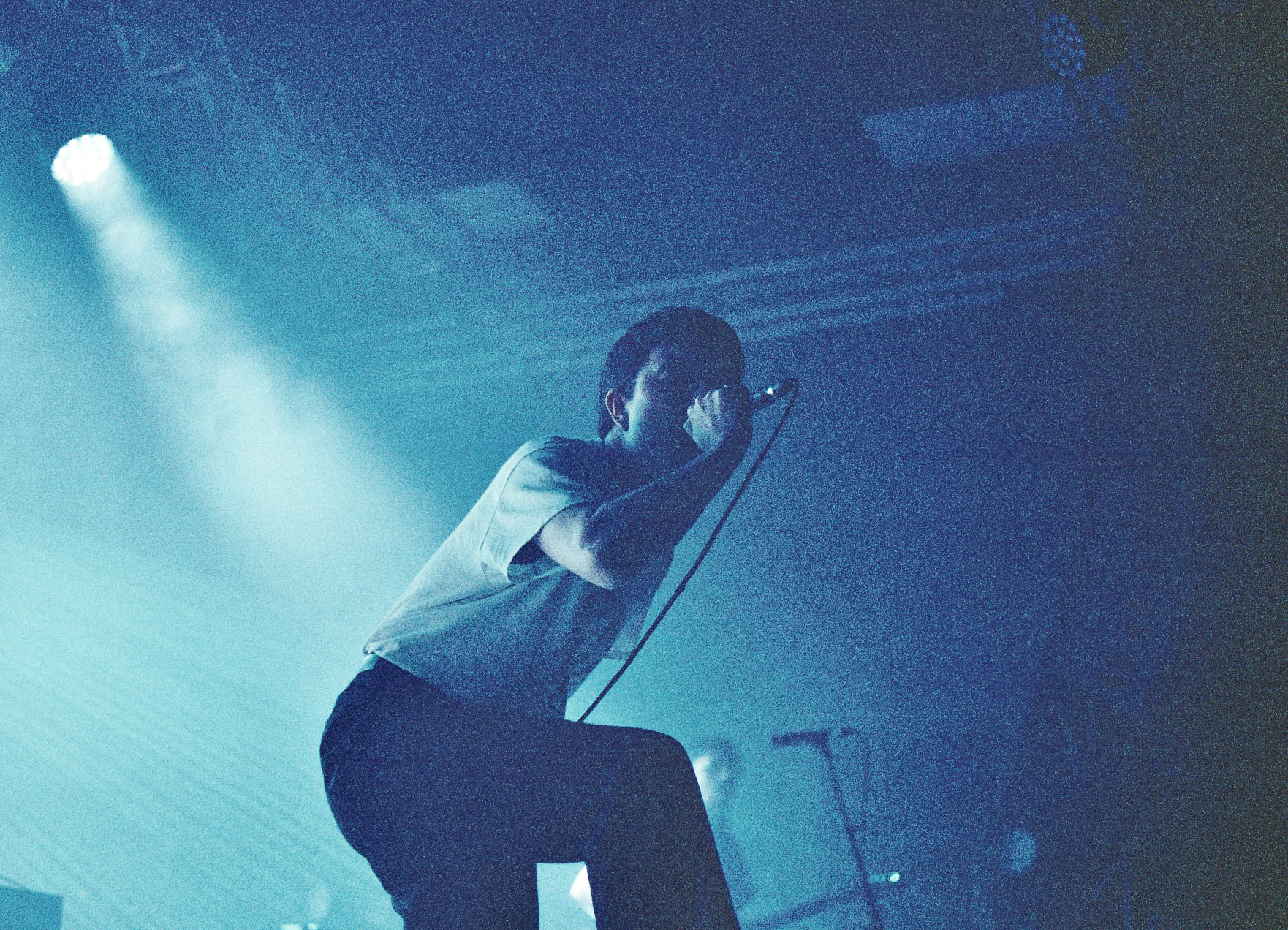
Il n’est jamais trop tard pour parler de Gurriers. Il y a un an, je les retrouvais en concert au festival Rockomotives, à Vendôme. Le set était aussi explosif que joyeux, et je prenais un malin plaisir à les photographier. Quelques heures plus tôt, je rencontrais Ben O’Neill (guitare, chœurs) et Mark MacCormack (guitare), et nous échangions avec fougue autour des séries télévisées, de la politique et de la musique, de l’importance d’aller en concerts et de Jérôme Bosch.
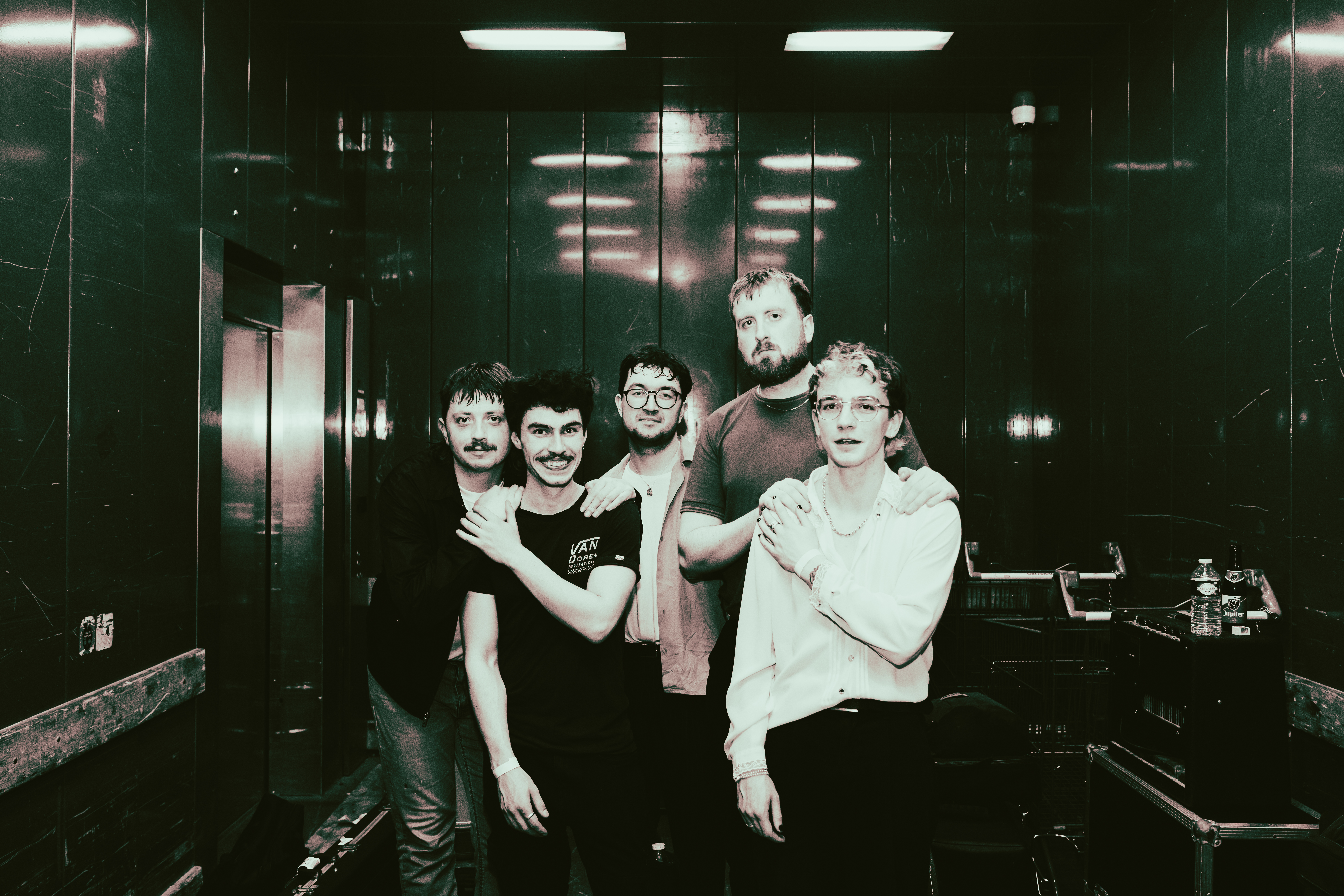
Votre premier album est sorti le 30 septembre. Depuis vous avez beaucoup tourné et vous allez encore continuer. Comment ne pas s’épuiser, moralement et physiquement ?
Mark (guitare) : Pour moi, c’est un peu comme une courbe d’apprentissage. Tu dois tester et te tromper. Pour l’instant, heureusement, on a été plutôt bons même s’il y a parfois eu des ratés côté logistique. En termes d’épuisement et de sensation, je pense que nous veillons tous les uns sur les autres, nous avons de la chance. Je pense que c’est important de savoir quand laisser quelqu’un tranquille et, juste te connaître toi-même aussi.
Ben (guitare, chœurs) : Nous sommes tous de très bons amis et heureusement, nous ne nous battons pas, ce qui est un bonus quand tu passes autant de temps dans un groupe. Donc je pense que le principal est juste d’en être conscient aussi. Être en tournée, c’est du travail, alors tu ne bois pas 4 à 5 pintes par soir, tu ne peux pas. Par contre tu peux en prendre une, te détendre et prendre soin de toi. C’est la chose principale. Jouer tous les soirs c’est fatiguant, donc si tu te prends pour une rock star, tu vas juste te brûler les ailes.

Je vous ai vus l’an dernier au festival Hop Pop Hop à Orléans. Vous n’aviez pas encore le succès que vous avez aujourd’hui en France. C’était votre deuxième concert. C’était incroyable. D’où tirez-vous votre énergie ?
Ben : Je pense que ça vient beaucoup du public et puis, on aime donner une performance énergique. En tant que spectateur, quand tu vois un groupe qui devient fou sur scène, ça te donne la permission de devenir un peu plus fou toi-même. Donc on donne ce qu’on espère recevoir.
Donc c’est une réponse au public ?
Mark : Oui, un changement d’énergie. Perso, j’adore le rock, mais j’aime aussi la musique dansante et aller sur la piste, même si j’ai deux pieds gauches. C’est pareil pour jouer. On ne le fait pas pour tester des trucs ; c’est naturellement ce qu’on ferait. Si la musique que tu fais ne t’excite pas, pourquoi la faire ? Ça ne veut pas dire que j’écoute nos disques et que je pense « nous sommes incroyables », pas du tout. Mais c’est un échange d’énergie avec le public.
Votre premier concert a eu lieu deux ans après votre création, à cause du Covid. Vous avez vendu 300 billets. Comment vous êtes-vous sentis ?
Ben : Comme des rockstars ! (rires)
Mark : C’était un moment surréaliste. On a fait salle comble, mais il y avait plusieurs raisons : c’était la nuit d’Halloween, dans un club connu à Dublin, on travaillait la musique depuis deux ans, on avait sorti quelques démos, eu un peu de radio, et les gens avaient hâte de sortir après deux ans de confinement. On était au bon endroit au bon moment.
Ben : C’était aussi une excuse pour sortir et boire. Vendre autant de billets pour ton premier concert, c’était incroyable. Tous ne seront pas comme ça.
Mark : Je n’avais jamais été aussi nerveux avant un concert. J’avais passé deux ans à parler du groupe à mes amis et ma famille. Cinq minutes avant de jouer, quelque chose sur mon pedalboard ne fonctionnait pas (un câble mal branché). Mais après le concert, je me sentais vraiment bien.

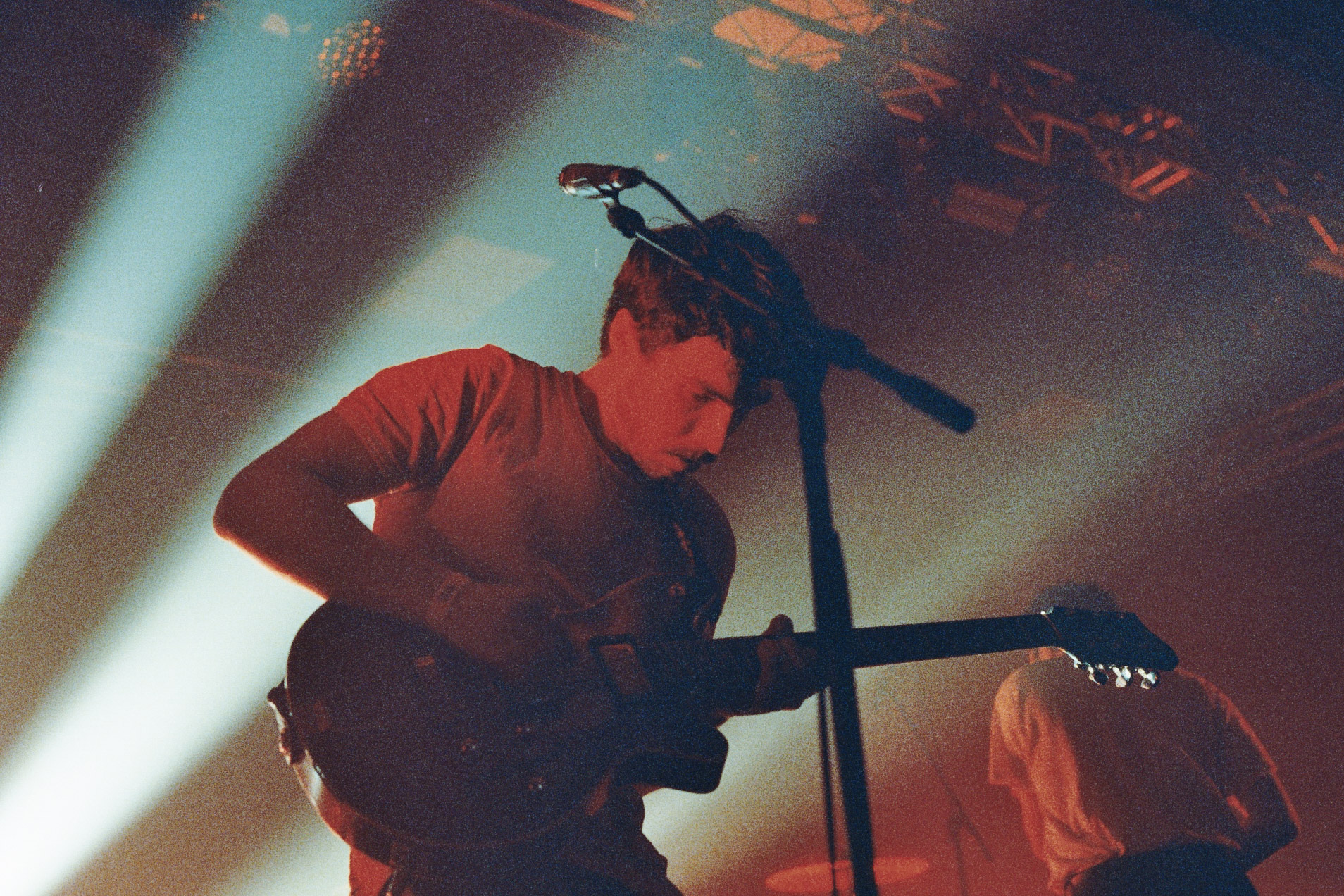
Crédit photo : Marine Berger
À travers cet album, on ressent de la colère envers le monde et l’Église catholique mais l’ensemble reste dansant et joyeux. C’était important pour vous de conserver cette ambivalence ?
Mark : Il y a des groupes estampillés « toujours en colère » mais finalement en tant qu’être humain, on ressent tout un tas d’émotions, qui vont de la joie…à la colère. Et c’est normal de ressentir ça. Et je pense qu’aussi cliché et ennuyeux que ça puisse paraître, nous sommes juste cinq mecs plutôt normaux. Et nous écrivons beaucoup sur nos expériences dans le monde.
Il y a beaucoup de choses qui rendent heureux, mais il y a aussi beaucoup de choses qui mettent en colère. Et quand tu écris de la musique « punk rock intense », personne ne veut entendre : « Je suis tellement heureux, ma chambre d’hôtel est grise », tu vois ce que je veux dire ? Et personne ne veut entendre juste « va te faire foutre, mec ».
Ben : Je ne pense pas qu’on ait crée le groupe en se proclamant des prophètes qui diraient tout ce qui ne va pas dans le monde. Mais qu’on ait la possibilité de s’exprimer, c’est génial. Avoir des paroles engagées sur de la musique qui bouge, c’est l’occasion de passer un super moment et une fois chez soi, peut-être qu’une personne dira : « Oh, cette phrase m’a vraiment touchée, qu’est-ce que je pense vraiment de ce sujet ? » Et je pense que c’est là que les paroles de Dan Hoff brillent vraiment.
C’est une manière de comprendre vos paroles.
Mark : La musique, c’est comme un bon légume. C’est savoureux et, une fois digéré, tu en retires les nutriments.
Ben : C’est une super analogie. Comme un radis.
Au-delà de l’album, vous vous engagez aussi politiquement en publiant un post sur les réseaux sociaux en faveur de la Palestine et en refusant de participer au festival SXS à cause de sponsors qui fournissent des armes à Israël. Que pensez-vous des artistes qui estiment que ce n’est pas leur rôle de s’engager ?
Mark : Personnellement, je pense que si tu as une plateforme, c’est important de l’utiliser. Mais je ne suis pas un donneur de leçons, je ne dirai pas aux autres ce qu’ils doivent faire ; chacun a ses raisons, qu’elles soient bonnes ou mauvaises. J’en sais rien et ce n’est pas mon problème.
Ben : Je pense qu’au final, ça se résume simplement à ce que tu estimes personnellement être la bonne chose à faire. Si certaines personnes ne veulent pas parler de politique, c’est correct. Forcer quelqu’un à dire quelque chose en quoi il ne croit pas, c’est pire. Si tu t’en fous un peu, c’est ok aussi : les gens se foutent de plein de putains de sujets différents dans la société, et on ne leur tire pas dessus pour ça non plus…
Vous avez dit dans une interview que le dernier morceau, Come and See, est un paysage onirique sur des gens qui lisent des livres et regardent des films pour oublier la merde qui se passe autour d’eux. Ne peut-on pas dire la même chose des concerts ?
Mark : Je pense que oui, tout à fait.
Ben : C’est aussi une forme d’évasion où tu peux aller te perdre pendant une heure ou deux dans le monde de quelqu’un d’autre. C’est ce que je trouve si puissant avec la musique. Tu vas à un concert et pendant quelques heures, tu n’es pas dans le monde réel. Tu existes juste dans cette salle, avec une centaine d’autres personnes et vous êtes témoins de la même scène. Tu te transportes ailleurs. Je pense que c’est incroyablement important pour les gens de pouvoir oublier les choses pendant quelques heures et juste exister comme un, parmi la foule, en expérimentant ce qui se passe là-bas. C’est presque une forme de thérapie…
Mark : Quand je ne vais pas bien, que j’ai passé une mauvaise journée ou semaine, j’en profite pour aller voir en concert un de mes groupes préférés ou un groupe que je ne connais même pas, avec quelques-uns de mes meilleurs amis. Et en l’espace de deux heures, tout va beaucoup mieux, parce que je vis cette expérience incroyable. Dans ces moments-là, tu réalises que toutes ces conneries n’ont pas d’importance, tu vois ? Il y a quelque chose de très… Je ne trouve pas les mots pour ça, je ne sais pas, il y a quelque chose d’un peu inexplicable.
Ben : Oui, c’est l’un de ces moments qui va, genre, au-delà des mots. C’est juste une pure sorte d’émotion et d’expérience, et je pense que parfois, ces choses-là, c’est mieux de les vivre que d’essayer de les décrire, parce que l’expérience de chacun est différente. Comment je me sens après un concert, comment je ressors d’un super concert, ce sera toujours différent de l’expérience de quelqu’un d’autre.
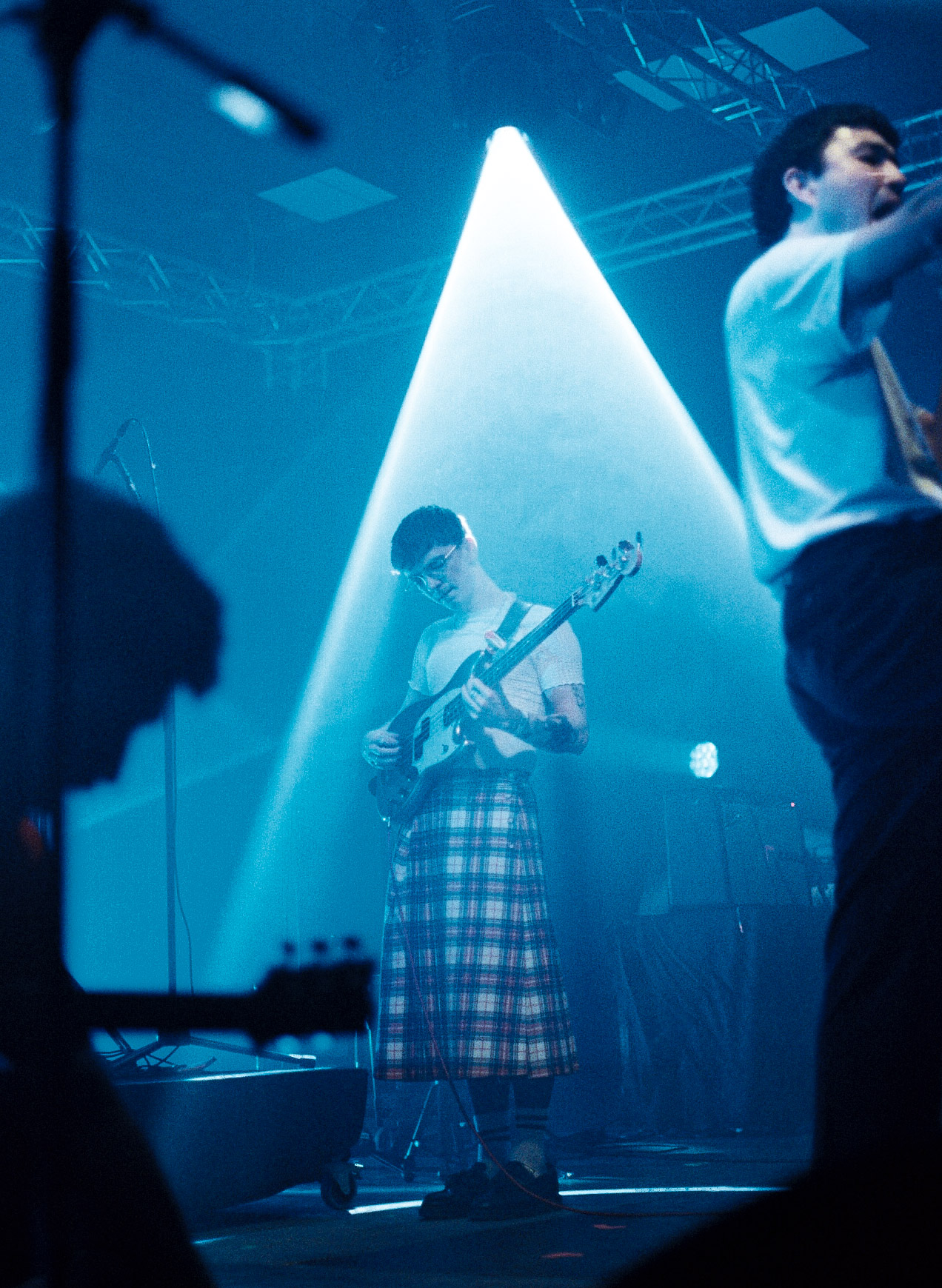
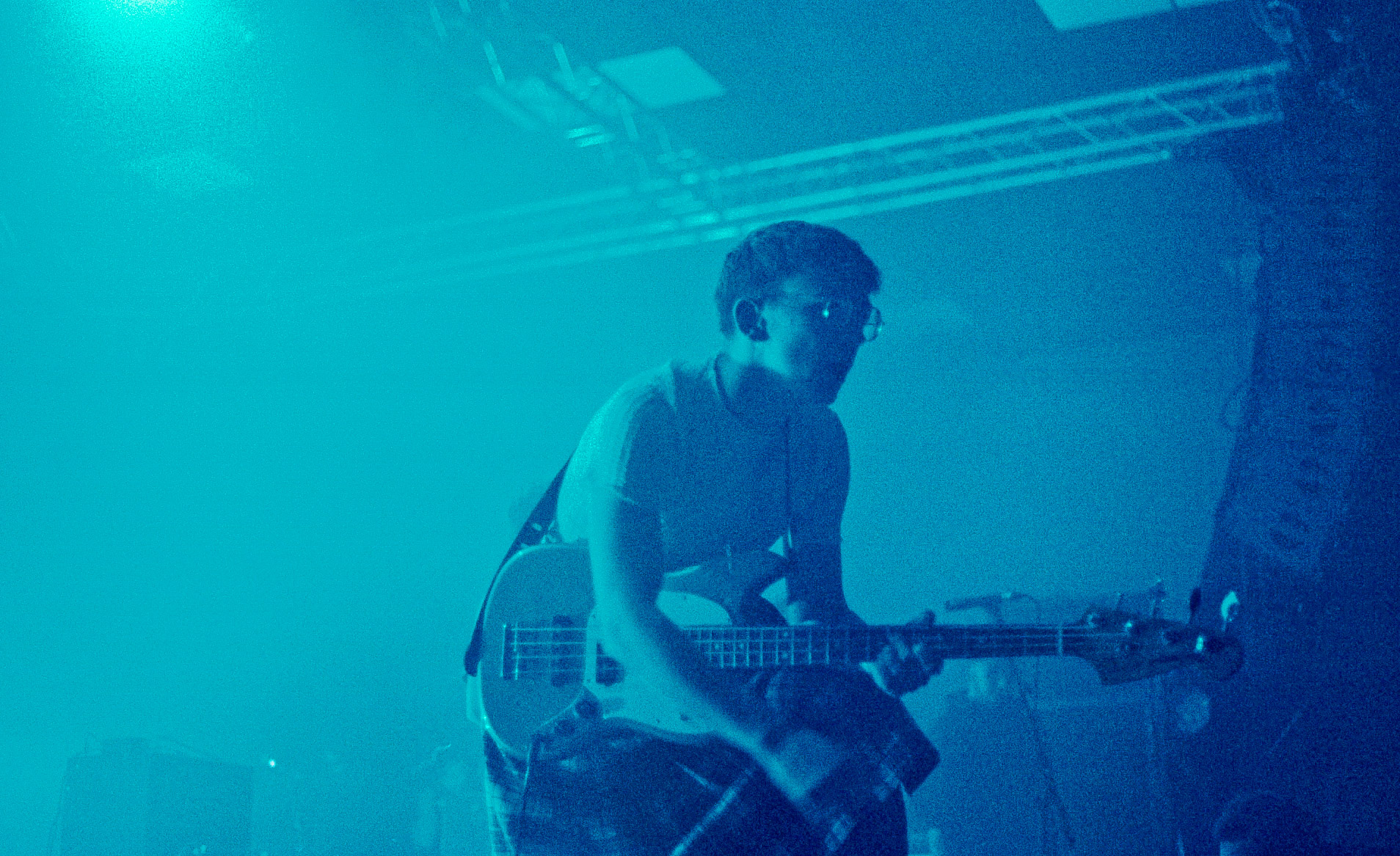

Crédit photo : Marine Berger
Qu’avez-vous écouté pendant l’enregistrement de l’album ?
Mark : On a beaucoup écouté la rappeuse Azealia Banks, la chanson 212.
Ben : Elle avait une chanson appelée New Bottega qui était sortie un peu avant qu’on fasse l’album, donc ça passait pas mal.
En fait, on a regardé beaucoup plus de films qu’on n’a écouté de musique. On a regardé un super film appelé In the Name of the Father, qui parle de l’Irlande, de Belfast et de l’IRA. Puis on a regardé le documentaire sur Metallica, Some Kind of Monster.
Mark : C’était très drôle de voir les parallèles entre nous, tout en bas de l’échelle, et eux, tout en haut, mais confrontés aux mêmes problèmes. Sauf que Metallica ont des millions de dollars et des toilettes en or. On a aussi regardé celui sur les Beastie Boys. Il était incroyable. On est de grands fans.
Ben : Pour moi, ce documentaire m’a vraiment marqué. J’adore ce groupe, mais je ne m’étais jamais vraiment plongé dans leur histoire. Donc je pense que pendant l’enregistrement de l’album, ça m’a donné un vrai boost aussi, en me disant : « cool, il faut qu’on soit un peu plus comme eux, un peu plus libres et moins encombrés ». Ils sont juste eux-mêmes, et ils s’en fichent un peu.
Mark : Ils suivent le flow, mec. C’est comme ça qu’on vit une vie créative, tu vois ? Je pense que tout ce qu’on écoutait pendant l’enregistrement, c’était nous-mêmes en train de jouer encore et encore.
Il y a eu plein d’influences qui ont nourri l’album, mais quand on enregistrait, on était vraiment à fond. On l’a enregistré sur des périodes assez intenses. On allait au Royaume-Uni pendant dix jours pour enregistrer, puis on rentrait chez nous pour cinq jours, peut-être jouer un ou deux concerts, puis repartir enregistrer pour la fin de la semaine. Puis rentrer chez nous pour trois jours, repartir, enregistrer à nouveau. Donc tout était très… boum, boum, boum, boum, boum. Et entre les sessions, on retournait tous au travail pendant deux ou trois jours, puis on repartait enregistrer l’album, tu vois, dans un autre pays. Donc je ne me souviens pas trop ce qu’on écoutait. Azealia Banks, définitivement.
Ben : Oui, c’est la seule dont je me souviens, genre, on fumait une clope et on lançait New Bottega pour se mettre dans l’ambiance un moment. Mais je suis sûr qu’on écoutait plein de musique, même si je ne pense pas que j’écoutais quoi que ce soit pour m’inspirer pendant l’album. Pour moi, en tout cas, c’était surtout une question d’être dans le moment de l’enregistrement et de me plonger complètement dans ce qui se passait au niveau sonore, et juste…Laisser ça vivre dans mon esprit librement pendant… trois semaines ?
Mark : Oui, trois semaines, puis il y avait encore une semaine, puis une autre semaine. Donc ça faisait quatre ou cinq semaines, avec des pauses.
Si vous deviez choisir un réseau, un film, une peinture, peu importe, qui vous définit, ou du moins que vous avez toujours à l’esprit, qu’est-ce que ce serait ?
Mark : On a découvert Jérôme Bosch. C’est un artiste néerlandais du XVe siècle et son œuvre est folle. La peinture Le Jugement dernier, est très surréaliste : plus tu regardes, plus tu zoomes sur un coin, plus le détail est fou. On la regardait et on se disait : « Qu’est-ce qui se passe ici ? ».
Où est la peinture ?
Ben : Elle est exposée à Vienne. Lorsqu’on l’a cherchée, on venait de quitter Vienne une semaine avant, et on s’est dit qu’on aurait pu la voir.
Mark : J’ai deux films, si ça te va. Ils sont très différents. L’un est Paris, Texas de Wim Wenders. Il m’a époustouflé. Un film magnifique, tant sur le plan cinématographique que pour l’histoire, mais aussi tellement déchirant. Je ne suis pas trop émotif devant les films, mais celui-là m’a vraiment fait ressentir quelque chose. Puis Jackie Brown, parce que comme toute personne de mon âge -j’ai vu Pulp Fiction à 12 ou 13 ans- mais je n’ai découvert Jackie Brown que bien plus tard, et j’ai adoré… Pam Grier est incroyable. Robert Foster est incroyable. La bande-son de Robert De Niro est incroyable. Tu sais, ce morceau de Bobby Womack, Across110th Street. Désolé, je vais aussi dire Climax de Gaspar Noé. La perspective à un point, j’adore ça. Tellement bien fait. Et la musique aussi, Thomas Bangalter.
Ben : Pour moi, ce serait probablement la toile L’Arrestation du Christ de Caravage, pour la composition. Pour l’aspect ombre et lumière. C’est quelque chose que je recherche toujours, dans n’importe quelle forme d’art : voir le contraste. Donc je choisirais ça comme image qui vit dans ma tête. Beaucoup d’ombre pour faire ressortir la lumière. C’est comme ça que je vois la vie : il y a des moments sombres et la lumière qui revient.
Mark : Il y a aussi trois séries TV qu’on adore. Bien sûr, on aime beaucoup de groupes et de musique, mais on prend aussi beaucoup d’influence d’autres choses : Sopranos, Atlanta de Donald Glover, incroyable (ndrl : en français), et Twin Peaks. C’est la meilleure série TV. On voit le fil surréaliste. Tout semble normal, et puis non, rien ne l’est.
Vous avez vu Six Feet Under ?
Mark : Je ne l’ai pas vu, mais j’ai entendu dire qu’ils possédaient une morgue. C’est ça ?
Oui, oui. Il y aussi Treme.
Mark : Je ne crois pas connaître. Tu peux m’écrire le nom ? J’aimerais la regarder. Du coup, j’ai la sensation qu’on doit te recommander quelque chose en retour. Oh, j’en ai une : tu as vu Watchmen ?
Non.
Mark : Trent Reznor, tu connais Nine Inch Nails ? Il a fait la bande-son, avec Atticus Ross. La B.O. est géniale. Techno pure. Très bien faite .Et c’est HBO, donc tu sais que c’est bien. Quand je vois ces trois lettres, je suis conquis. Fan absolu de Watchmen. Je recommande vivement. Si tu aimes les séries qu’on a mentionnées, Watchmen est bien aussi. Autre chose ?
Ben : True Detective saison 1, je suppose. J’aime aussi les autres, mais la saison 1… meilleure saison TV jamais faite. Oh, aussi Malcolm in the Middle.
Mark : On adore Malcolm in the Middle.
Ben : désolé, On peut parler de TV et films toute la journée. On passe beaucoup de temps à regarder ça aussi.
Mark : Aujourd’hui, on regardait Sopranos dans le van avec tout le monde. Et c’était drôle parce qu’on n’arrivait pas à faire marcher les enceintes. Donc voilà la scène : l’ordinateur était sur la table, branché à l’HDMI, il y avait deux téléviseurs, mais le son ne marchait pas, donc j’ai dû connecter une enceinte Bluetooth à mon ordinateur. Sopranos passait de l’ordi aux télévisions, et l’enceinte Bluetooth diffusait le son. Oui, c’était un montage intéressant. (rires) Ce sera pour la dernière ligne de l’interview: « les choses qu’on fait par amour ».
Mark : J’espère qu’on n’a pas parlé trop vite, on s’est un peu emballés aussi.
ENGLISH VERSION
Your first album came out on September 30th. Since then you’ve toured a lot, and you’re still going. How do you avoid burning out, mentally and physically?
Mark: For me, it’s kind of like a learning curve. You have to test things and get them wrong. So far, luckily, we’ve been pretty good, even if there have been some logistical slip-ups here and there.
In terms of exhaustion and how it feels, I think we all look out for one another. We’re lucky. We’re all close.
I think it’s just important to know when to leave someone alone, and also to know yourself.
Ben: We’re all really good friends, so we get along well. And thankfully, we don’t fight, which is a bonus when you spend so much time together in a band. So I think the main thing is just being aware of that too. Being on tour is work, so you’re not drinking 4 or 5 pints every night — you can’t. But you can have one, relax, and take care of yourself. That’s the main thing. Playing every night is tiring, so if you start acting like a rock star, you’ll just burn out next year.
I saw you last year at the Hop Pop Hop festival in Orléans. You didn’t yet have the success you have now in France. It was your second show ever. It was incredible. Where do you get your energy from?
Ben: I think a lot of it comes from the audience, and also, we love giving an energetic performance. As a spectator, when you see a band go crazy on stage, it gives you permission to go a bit crazy yourself. So we give what we hope to receive.
So it’s a response to the audience.
Mark: Yeah, an exchange of energy. Personally, I love rock, but I also love dance music and going out to the dance floor, even if I have two left feet. It’s the same when we play. We don’t force it; it’s just naturally what we’d do. If the music you’re making doesn’t excite you, why make it? That doesn’t mean I listen to our records and think “we’re amazing,” not at all. But it is an exchange of energy with the audience.
Your first gig happened two years after forming because of Covid. You sold 300 tickets. How did you feel?
Ben: Like rock stars!
Mark: It was a surreal moment. We sold it out, but there were several reasons: it was Halloween night, in a well-known club in Dublin, we’d been working on the music for two years, we’d released a few demos, gotten some radio play, and people were eager to go out again after two years of lockdown. We were in the right place at the right time.
Ben: It was also an excuse to go out and drink. Selling that many tickets for your first show, that was incredible. Not all shows will be like that.
Mark: I’d never been so nervous before a show. I’d spent two years talking about the band to my friends and family. Five minutes before playing, something on my pedalboard wasn’t working — a cable not plugged in properly. But after the show, I felt really good.
Through the album, we can feel anger toward the world and the Catholic Church, among other things, but it still remains danceable and joyful. Was it important to keep that ambivalence?
Mark: Some bands get labelled “always angry,” but ultimately, as a human being, you feel all kinds of emotions — joy, anger. And it’s normal to feel both.
And I think, as cliché and boring as it might sound, we’re just five pretty normal guys. And we write (well, specifically Dan writes) a lot of the lyrics based on his experiences and our experiences in the world.
There are lots of things that make you happy, but also lots of things that make you angry. And when you’re writing “intense punk rock,” no one wants to hear “I’m so happy, my hotel room is grey,” you know what I mean? And no one wants to hear just “fuck you, man,” either.
Ben: I don’t think we started the band proclaiming ourselves prophets who would state everything that’s wrong with the world, but the fact that we get to express ourselves is great.
Having meaningful lyrics over music that moves, it gives you the chance to have a great time and then, once you’re home, maybe someone will say: “Oh, that line really hit me, what do I actually think about that topic?” And I think that’s where Dan Hoff’s lyrics really shine.
That’s a way to understand your lyrics.
Mark: Music is like a good vegetable. It’s tasty, and once it’s digested, you get the nutrients out of it.
Ben: That’s a great analogy. Like a radish.
Beyond the album, you also take political stands — posting in support of Palestine and refusing to play SXSW because of sponsors supplying weapons to Israel. What do you think of artists who feel it’s not their role to get involved? Or about political engagement in music in general?
Mark: Personally, I think that if you have a platform, it’s important to use it. But I’m not going to tell others what they should do; everyone has their reasons.
Ben: If some people don’t want to talk about politics, that’s fine. Forcing someone to say something they don’t believe in is worse.
You said in an interview that the last track, Come and See, is a dreamlike landscape about people reading books and watching films to forget the shit going on around them. Couldn’t you say the same thing about concerts?
Mark: I think yes, absolutely.
Ben: It’s also a form of escape where you can lose yourself for an hour or two in someone else’s world. That’s what I find so powerful about music. You go to a concert and for a couple of hours, you’re not in the real world. You just exist in that room with a hundred other people, witnessing what’s happening on stage. You transport yourself somewhere else.
I think it’s incredibly important for people to be able to forget things for a few hours and just exist as one person among the crowd, experiencing what’s happening there. It’s almost a form of therapy…
Mark: Sometimes I have a bad day, or a bad week, or I’m not doing well, and then I go see one of my favourite bands, or even a band I don’t know, with a few of my best friends. And in two hours, everything feels so much better, because I’m living that incredible experience. In those moments, you realise that all that bullshit doesn’t matter, you know? There’s something very… I can’t find the word for it, I don’t know, there’s something a bit inexplicable.
Ben: Yeah, it’s one of those moments that goes beyond words. It’s just pure emotion and experience, and I think sometimes those things are better lived than described, because everyone’s experience is different. How I feel after a concert, how I leave a great show, will be different from someone else’s experience, no matter how euphoric.
What did you listen to while recording the album?
Mark: We listened to a lot of Azealia Banks, the song 212.
Ben: She had a song called New Bottega that came out a bit before we made the album, so that was playing a lot.
Actually, we watched way more films than we listened to music. We watched a great movie called In the Name of the Father, about Ireland, Belfast, and the IRA. Then we watched the Metallica documentary Some Kind of Monster.
Mark: It was really funny to see the parallels between us at the very bottom of the ladder and them at the very top, but facing the same problems. Except Metallica have millions of dollars and golden toilets. We also watched the Beastie Boys documentary. It was incredible. We’re huge fans.
Ben: For me, that documentary really stuck with me. I love that band, but I’d never really dived into their story. So I think during the album recording, it gave me a real boost, like: “cool, we need to be a bit more like them — more free and less burdened.” They’re just themselves, and they don’t really care.
Mark: They go with the flow, man. That’s how you live a creative life, you know? I think the only thing we really listened to while recording was us playing ourselves over and over again.
There were loads of influences that fed the album, but when we were recording, we were really all in. We recorded it in quite intense bursts. We’d go to the UK for ten days to record, then come home for five days, maybe play a show or two, then head back to finish the week.
Then go home for three days, go back again to record. So everything was very… boom, boom, boom, boom, boom. And between sessions, we’d all go back to work for two or three days, then fly off again to record the album in another country. So I don’t really remember what we were listening to. Azealia Banks, definitely.
Ben: Yeah, the only one I remember is that we’d smoke a cigarette and put on New Bottega to hype ourselves up. But I’m sure we listened to tons of music, even if I don’t think I listened to anything to inspire me during the album. For me, it was more about being in the moment and immersing myself completely in whatever was happening sonically, and just… letting it live freely in my mind for… three weeks?
Mark: Yeah, three weeks, then another week, then another week. So it was four or five weeks total, with breaks.
If you had to choose one thing — a network, a film, a painting, whatever — that defines you, or at least something you always have in mind, what would it be? A film or a band? A painting, a TV series, anything.
Mark: We discovered Hieronymus Bosch. He’s a Dutch painter from the 15th century and his work is insane. The painting The Last Judgment is very surreal: the more you look, the more you zoom in on a corner, the crazier the detail gets. We looked at it and were like, “What is happening here?”
Where is the painting?
Ben: It’s displayed in Vienna. When we looked it up, we realised we’d left Vienna the week before and thought we could have seen it.
Mark: I have two films, if that’s okay. They’re very different. One is Paris, Texas. That film blew me away. A beautiful film — visually, narratively — but also completely heartbreaking. I’m not very emotional with films, but that one really made me feel something.
Then Jackie Brown, because like everyone my age, I saw Pulp Fiction when I was 12 or 13, but I only discovered Jackie Brown much later, and I loved it… Pam Grier is incredible. Robert Forster is incredible. The soundtrack with Robert De Niro is incredible. You know, that Bobby Womack track… “Across 110th Street.” Terrible impression, but I love that film, the whole vibe.
Sorry, I’m also going to say Climax by Gaspar.
And whaaaat? I’m never drinking again.
Ben: No more punch, you’ll do better. Acid with a bit of punch.
And the way it’s filmed — one single shot.
Mark: The one-point perspective. I love that. So well done. Yeah. And the music too, Thomas Bangalter.
Ben: For me, it would probably be the painting The Taking of Christ by Caravaggio, for the composition. For the light and shadow. It’s something I always look for in any form of art: seeing the contrast. So I’d pick that as the image living in my head. Lots of darkness to bring out the light. That’s how I see life: there are dark moments and the light comes back.
Mark: There are also three TV shows we love. Of course, we love tons of bands and music, but we also draw a lot of influence from other things: The Sopranos, Atlanta by Donald Glover (ndrl : « incroyable » in french) and Twin Peaks. Best TV show ever. You can see the surreal thread. Everything seems normal, and then suddenly it’s not.
Have you seen Six Feet Under?
Mark: I haven’t, but I’ve heard they own a morgue, right?
Yeah, yeah. And Treme.
Mark: I don’t think I know it. Could you write the name down for me? I’d love to watch it. I feel like we should recommend something in return. Oh, I’ve got one: have you seen Watchmen?
No.
Mark: Trent Reznor — you know Nine Inch Nails? — he made the soundtrack with Atticus Ross. The score is amazing. Pure techno. Really well done. And it’s HBO, so you know it’s good. When I see those three letters, I’m sold. I’m a huge fan of Watchmen. Highly recommend it. Anything else?
Ben: True Detective season 1, I guess. I like the other seasons too, but season 1… best TV season ever made. Oh, also Malcolm in the Middle.
Mark: We love Malcolm in the Middle.
Ben: Sorry, we could talk about TV and films all day. We spend a lot of time watching that stuff too.
Mark: Today we were watching The Sopranos in the van with everyone. And it was funny because we couldn’t get the speakers to work. So here’s the scene: the laptop was on the table, plugged into HDMI, there were two TV screens, but the sound wouldn’t work, so I had to connect a Bluetooth speaker to my laptop. The Sopranos was playing from the laptop through the TVs, and the sound was coming from the Bluetooth speaker. Yeah, it was an interesting setup. (laughs) That should be the last line of the interview: “the things we do for love.”
Mark: I hope we didn’t speak too fast — we got a bit carried away.
 Fréquence O
Laisser un commentaire