
Fin août, je suis invitée au FME, le Festival de Musique Emergente à Rouyn-Noranda, au Canada. Je découvre en live Yoo Doo Right, trio installé à Montréal. Leur concert m’éblouit, me sidère et m’émeut. Des sonorités brutes, un univers immersif imprégné de post-rock. Je décide dès le lendemain de les interviewer. On a parlé de tornades, d’intelligence artificielle, de capitalisme, de littérature et de cinéma.

Fréquence O : Comment allez-vous depuis hier ?
Justin (guitare, synthés, voix) : Bien. On est un peu fatigués. On a un peu fait la fête.
Qu’est-ce que vous avez vu comme concerts ?
Justin : Après Solids, on est allés voir Les Breastfeeders, et Bad Waitress. Elles sont de Toronto et elles sont vraiment bien. Et Puffer. Ils sont géniaux.
Vous vous préparez pour votre prochain concert dans quelques heures avec Population II et Nolan Potter. Il y a un album qui va sortir bientôt, quelle est l’histoire derrière, et comment vous êtes-vous rencontrés ?
Justin : On est très bons amis avec les gens de Population II, et on partageait une maison pendant le festival South by Southwest au printemps dernier. Nolan était une connaissance, et il nous a tous invités à venir faire un peu de musique dans son nouveau studio. On a donc branché notre matériel et pendant quelques heures, on a joué ensemble, complètement sur le moment, sans avoir rien préparé. Puis Nolan et son ami ont tout enregistré.
On ne pensait pas qu’on en ferait quoi que ce soit jusqu’à ce qu’on réalise qu’on avait vraiment capturé quelque chose de spécial. C’était juste une expérience très positive qui, au final, sonnait vraiment bien.
Je connais quelqu’un qui vous a vus il y a quelques jours à Montréal. Il m’a dit que le concert était vraiment intense.
Justin : Oui mais c’était tellement amusant d’enregistrer l’album que lorsqu’on se retrouve, ça l’est toujours, car on ne se met aucune pression. Alors on sourit tous et on passe un bon moment. Ça se sent dans le public. A Montréal, je regardais autour de moi et tout le monde avait un grand sourire sur le visage.
Avez-vous prévu de venir en France avec cet album ?
Justin : Peut-être, peut-être pas. Avec Population II on n’a plus de plans après ça.
John (batteur) : Mais si quelqu’un veut nous faire venir, on le fera.
Justin : Avec Yoo Doo Right, on va aller en France, en Belgique et aux Pays-Bas en novembre. On joue au festival Le Guess Who ? à Utrecht.
Vous êtes actifs sur Montréal depuis 2016. Et vous avez déjà sorti plusieurs EP. From the Heights of Our Pastureland est votre troisième album. Vous avez travaillé avec le label Mothland, comment les avez-vous rencontrés ?
Justin : On les a rencontrés il y a longtemps, quand ils organisaient le Distortion Psych Fest. Ils programmait toujours des concerts, c’était une petite bande.
Et puis Marilyn a décidé, avec un groupe d’amis, de lancer Mothland, au départ juste comme agente de booking, et on a commencé à bosser ensemble comme ça. Au moment de la pandémie, ils ont décidé qu’ils allaient créer un label. Comme on travaillait déjà avec eux, on a pas eu se battre pour être sur le label (rires)
John : Ils croient vraiment en nous.
Pour cet album, vous vous êtes enfermés dans une cabane pendant une tempête de neige, début 2023, et vous avez tout enregistré en seulement trois jours. Les éléments extérieurs ont-ils joué un rôle dans la création, et comment se déroule votre processus créatif ?
Justin : Bonne question.
Ouais, c’était une tempête de neige, donc on ne sortait pas vraiment, on était juste forcés de se lever, faire un café et jouer de la musique. Mon souvenir de tout ça est assez flou, parce que j’avais une infection, j’étais très malade. Notre processus d’écriture a consisté à placer des micros, jouer de la musique ensemble puis garder les choses qui étaient bonnes et les développer.
John : Ça a été le catalyseur pour commencer l’album. On a écrit plein de choses, et ensuite on a tout ramené, on a fini le disque, et ensuite on est allés l’enregistrer avec Seth Manchester à Machines with Magnets, et il était super.
A quoi ressemble votre processus créatif en général ?
Justin : C’est généralement juste des idées, dont on parle et qu’on explore ensuite. Parfois, c’est plus abouti. John peut avoir une idée de rythme et il dit : « oh, faisons quelque chose comme ça » et on développe.
Parfois, j’ai un enregistrement sur bande au hasard qui peut remplir un passage sur un album, et ça marche très bien.
Le résultat est un album émotionnel et, maintenant que je vous ai vus, je peux dire cathartique. C’est à la fois une expérience émotionnelle et physique, assez difficile à expliquer. En ce sens, votre musique se rapproche du post-rock, qui est aussi très sensoriel. Êtes-vous d’accord avec ça ?
Justin : Ouais, je pense qu’on hésite à se qualifier de groupe de post-rock, surtout parce que là d’où on vient, à Montréal, il y a une histoire très riche de ce genre-là. Et je pense que c’est facile d’être rangé dans cette case.
Mais ouais, la musique pour nous est une chose émotionnelle et cathartique, on ressent ces choses en même temps que tout le monde dans la salle quand on la remplit de son comme ça.
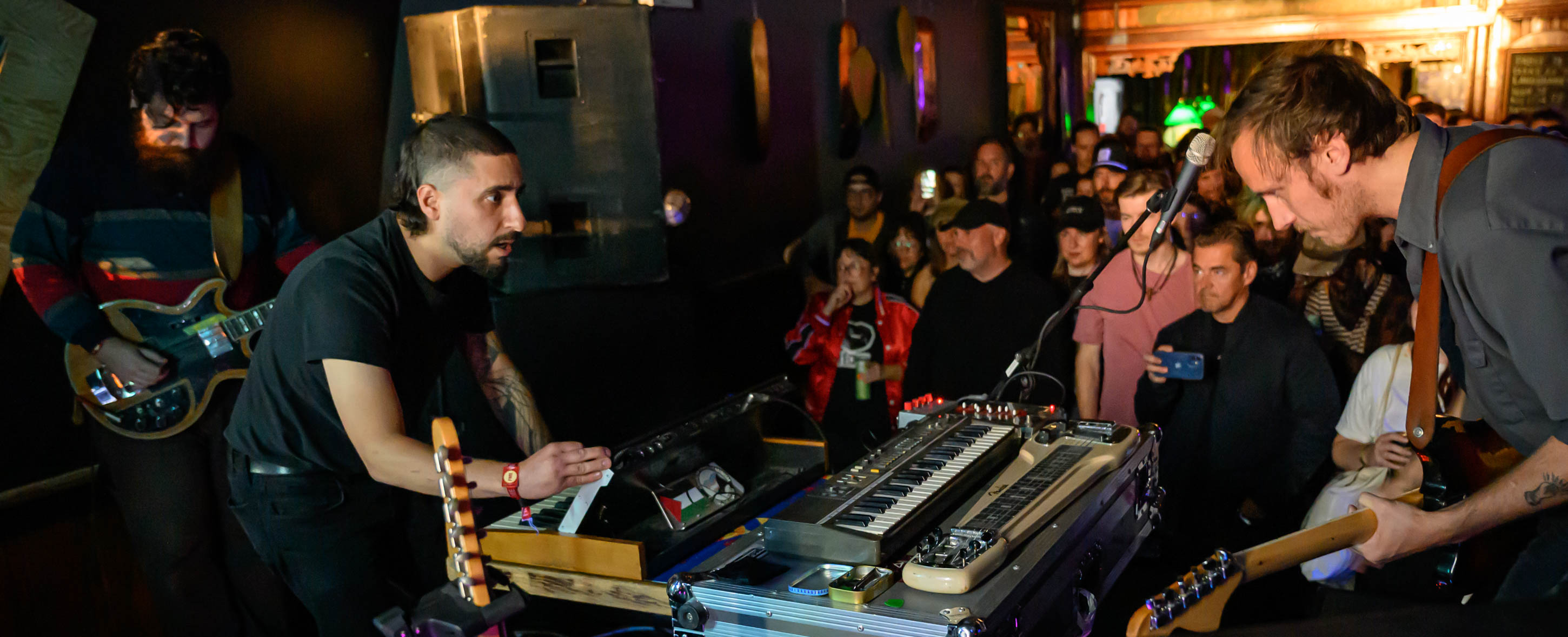
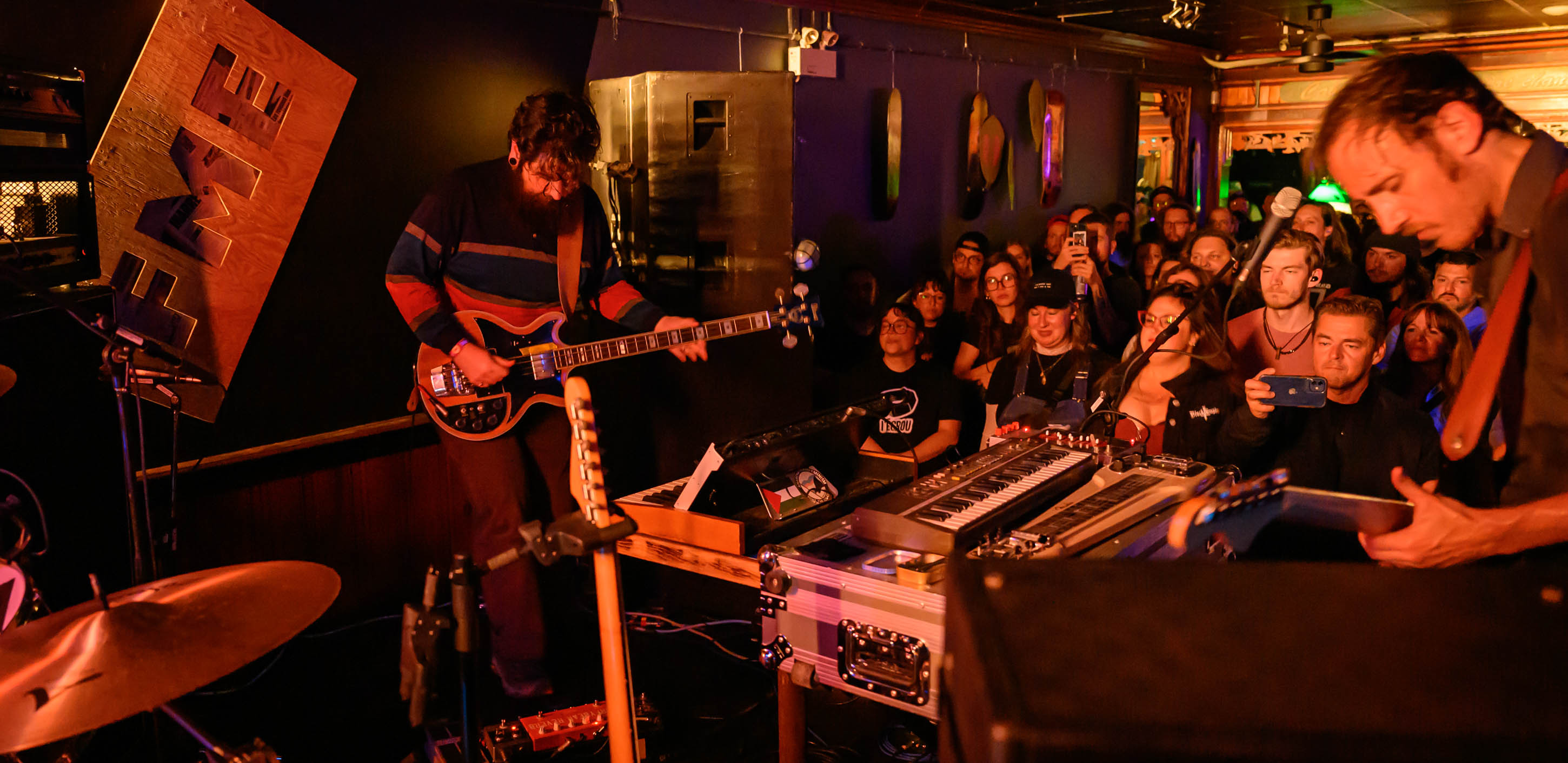
Yoo Doo Right au FME. Crédit photo : Thomas Dufresne
Pour cet album, vous avez été inspirés par la marchandisation de l’art, et en particulier l’IA. Pouvez-vous partager vos réflexions là-dessus ?
Justin : C’est une période un peu difficile pour les artistes, surtout dans la manière dont la musique et l’art sont consommés. C’est très capitaliste. La marchandisation de l’art en général, ce n’est pas quelque chose que les gens peuvent vraiment expérimenter ensemble.
John : Pour Eager Glacier par exemple, on s’est dit : « faisons de la musique vraiment inaccessible, implacable, qui n’est pas faite pour être consommée passivement », parce que ça ne suit pas vraiment une structure concise et consommable. On était juste énervés contre le monde tel qu’il se manifestait.
Je vois aussi un lien avec l’artwork de l’album, qui semble assez sombre, avec une tempête…
John : Justin adore les tornades, il voulait être chasseur de tempêtes quand il était enfant. (rires)
Justin : C’est juste une vieille image d’une tempête, je crois en Alberta, près d’Edmonton. Elle correspondait bien au thème.
Et que pensez-vous de l’avenir de la musique avec l’émergence de l’IA ?
Justin : Je ne sais pas. Je ne pense juste pas qu’on gagnera un jour notre vie en faisant ça à cause de ça. (rires)
Êtes-vous directement impactés ?
Justin : Probablement. Je ne sais pas trop quoi dire là-dessus, parce que j’y pense beaucoup, et ensuite ça me rend tellement triste que je me dis : « ok, faut arrêter d’y penser ».
Je veux être un peu plus positif.
Et en même temps, je pense que l’IA peut remplacer beaucoup de choses, mais elle ne peut pas remplacer les émotions d’un concert.
Justin : Ouais, je pense que la musique est quelque chose qui doit être vécue avec les gens, et ce sentiment d’unité, de faire partie de quelque chose ensemble, je pense qu’il n’est pas vraiment mis en avant dans la grande industrie de la création et de la consommation d’art. On a tous grandi en faisant de la musique avec nos amis, et en espérant que tout le monde autour de nous puisse être soutenu et pris en charge.
Il y a quelque chose d’un peu sans âme dans la façon dont les choses sont faites maintenant.
Quelles sont vos influences tout au long de cet album, et plus généralement ?
J’ai entendu parler de Wes Montgomery, Neurosis ou Russian Circles, mais qu’en pensez-vous ?
Justin : C’est difficile à dire. Je pense qu’on écoutait beaucoup de musique, mais on était surtout inspirés par notre anxiété. (rires)
John : Le disque venait clairement d’un endroit où on se disait : « oh non ».
C’est étrange de le revoir maintenant, mais je ne peux pas vraiment dire ce qui nous inspirait, on voulait juste se plonger dans la difficulté.
Justin : Mais des influences musicales, on en a plein, c’est pour ça que c’est dur à dire.
John : On est nuls pour ça, apparemment. (rires)
Vous vous êtes entourés de gens qui travaillent avec Lingua Ignota, Suuns, Godspeed. Pouvez-vous nous parler un peu de cette collaboration ? Est-ce que ça vous a inspirés pour votre album ?
Justin : Beaucoup, oui. Seth Manchester, qui a enregistré notre dernier album, avait mixé celui d’avant.
Et on savait, quand il avait mixé le précédent, qu’on voulait enregistrer le suivant avec lui. Je pense que ça a vraiment influencé la direction qu’on prenait, parce qu’on connaissait bien son travail et le type de traitement sonore qu’il donnerait aux morceaux. Donc on s’est appuyés là-dessus.
Et je pense que son approche de l’enregistrement et du mixage nous a clairement inspirés pour ce disque.
Il a travaillé sur des albums incroyables, il a vraiment l’oreille absolue. C’est quelqu’un de très talentueux.
Dans vos morceaux, il y a des paroles sporadiques qui emmènent les chansons dans différentes directions. Comment cet élément est-il apparu ?
Justin : Eh bien, tu peux entendre à quel point je suis charismatique dans cette interview. (rires) Je n’aime pas vraiment chanter et être le centre de l’attention sur scène. Mais John dit souvent : « il faudrait des voix ici« .
John : et elles sont bien.
Justin : Je ne dirais pas que je suis forcée de le faire, mais c’est quelque chose que je n’aime pas trop, être trop vu ou entendu. Je mets mes guitares très fort pour ne pas avoir à communiquer avec mes mots. Je communique comme ça. (rires)

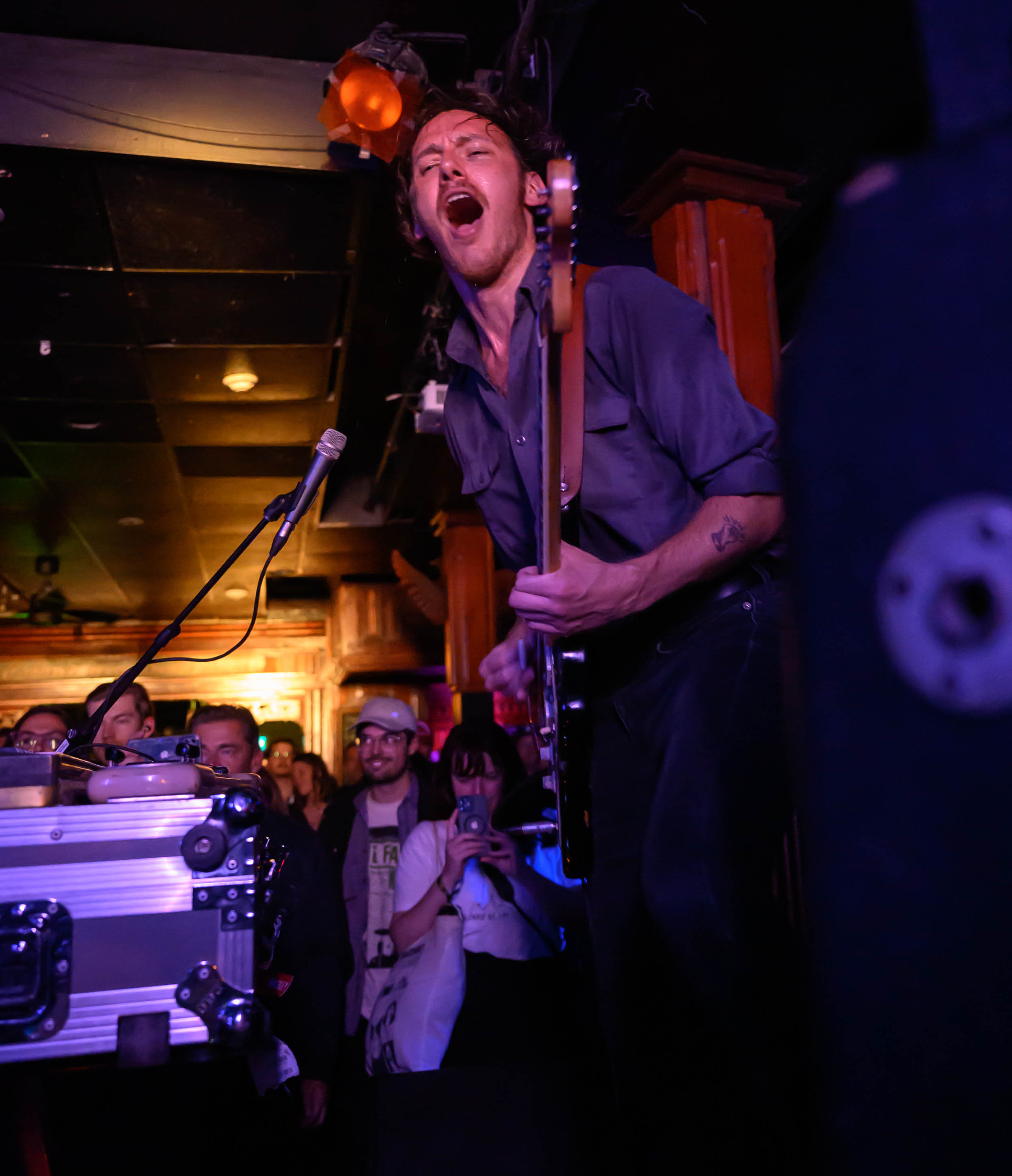

Yoo Doo Right au FME. Crédit photo : Thomas Dufresne
On a pu le voir hier, c’était très intense, parce que vous êtes très concentrés.
Justin : Oh ouais, on transpirait beaucoup.
Oui, et vous êtes très focus. Je fais beaucoup de concerts, vraiment beaucoup, et ça faisait longtemps que je n’avais pas ressenti ça, d’être vraiment happée par le truc. Il se passe vraiment quelque chose en live, c’est très impressionnant. Et le fait de te voir transpirer à grosses gouttes, je les voyais tomber par terre...
Justin (en français) : il y a une certaine intensité qu’on aime vraiment bien.
Est-ce que vous pouvez me parler du musicien qui joue aussi dans le groupe Meggie Lennon, qui est venu vous accompagner au clavier ?
Justin : Dave nous a rejoints pour quelques morceaux. C’était des nouveaux qu’on jouait pour la première fois, et on avait besoin d’un peu d’aide pour les synthés. C’est un très bon ami, on le connaît depuis des années et on s’est toujours dit : « il faut qu’on fasse de la musique ensemble ».
Après… Notre version de jouer ensemble, c’était de le faire tenir une note sur un synthé pendant 25 minutes. (rires)
On adore Dave, il va sûrement y avoir plus de lui à l’avenir, j’espère.
John : Il transpirait aussi à la fin du premier morceau. (rires)
C’est l’énergie qu’il faut apporter, alors j’ai dit : « parfait. »
Et comment vous êtes-vous rencontrés ?
Justin : John vivait à Montréal depuis plus longtemps que moi, mais on venait tous les deux d’autres endroits du Canada.
John jouait de la batterie dans le groupe d’un ami commun. Et je me souviens que le groupe pour lequel ils faisaient la première partie s’appelait Diarrhea Planet (rires). Et je me suis dit : « wow ».
Je venais juste de déménager à Montréal, je voulais vraiment faire de la musique ici, et j’ai vu John jouer de la batterie, je me suis dit : « il faut qu’on fasse de la musique ensemble un jour ». C’est bizarre, c’était il y a dix ans.
John : Et Tim est tout nouveau. Il a rejoint le projet ces derniers mois. On a eu notre premier concert avec lui à la basse il y a un mois, au Yukon.
Justin : On s’est rencontrés à l’origine parce qu’on aimait beaucoup le matériel de musique.
John : J’ai acheté un baffle à lui, il y a presque huit ans maintenant.
Justin : Oh wow. Et on s’est toujours connus à travers ce monde du matos musical. En anglais, on dirait qu’on était des rig lords ou tone lords. (rires) Ca s’est fait naturellement. Timothy aimait composer alors on s’est dit : « Hey mec, tu sais faire de la musique, faisons ça ensemble. »
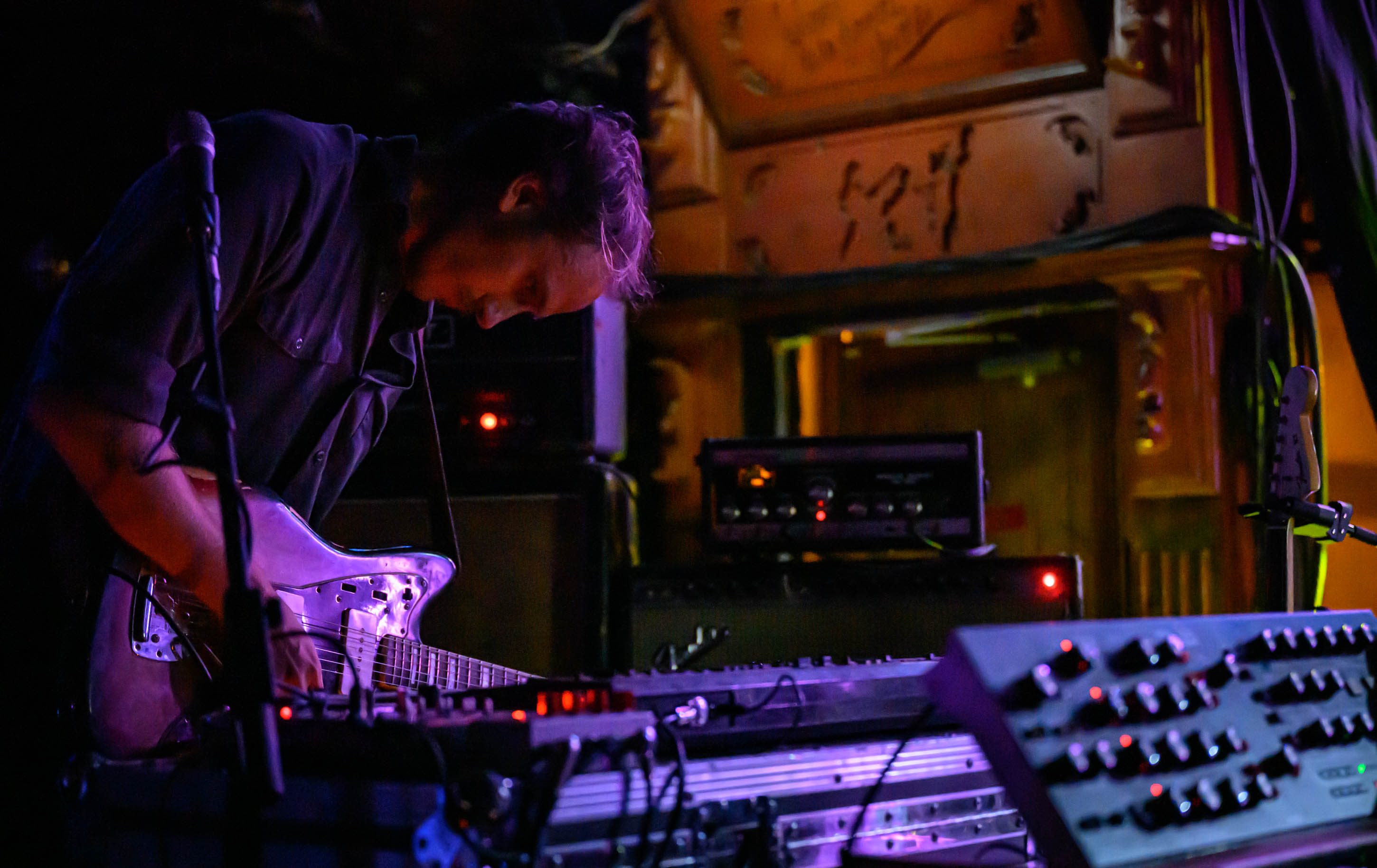

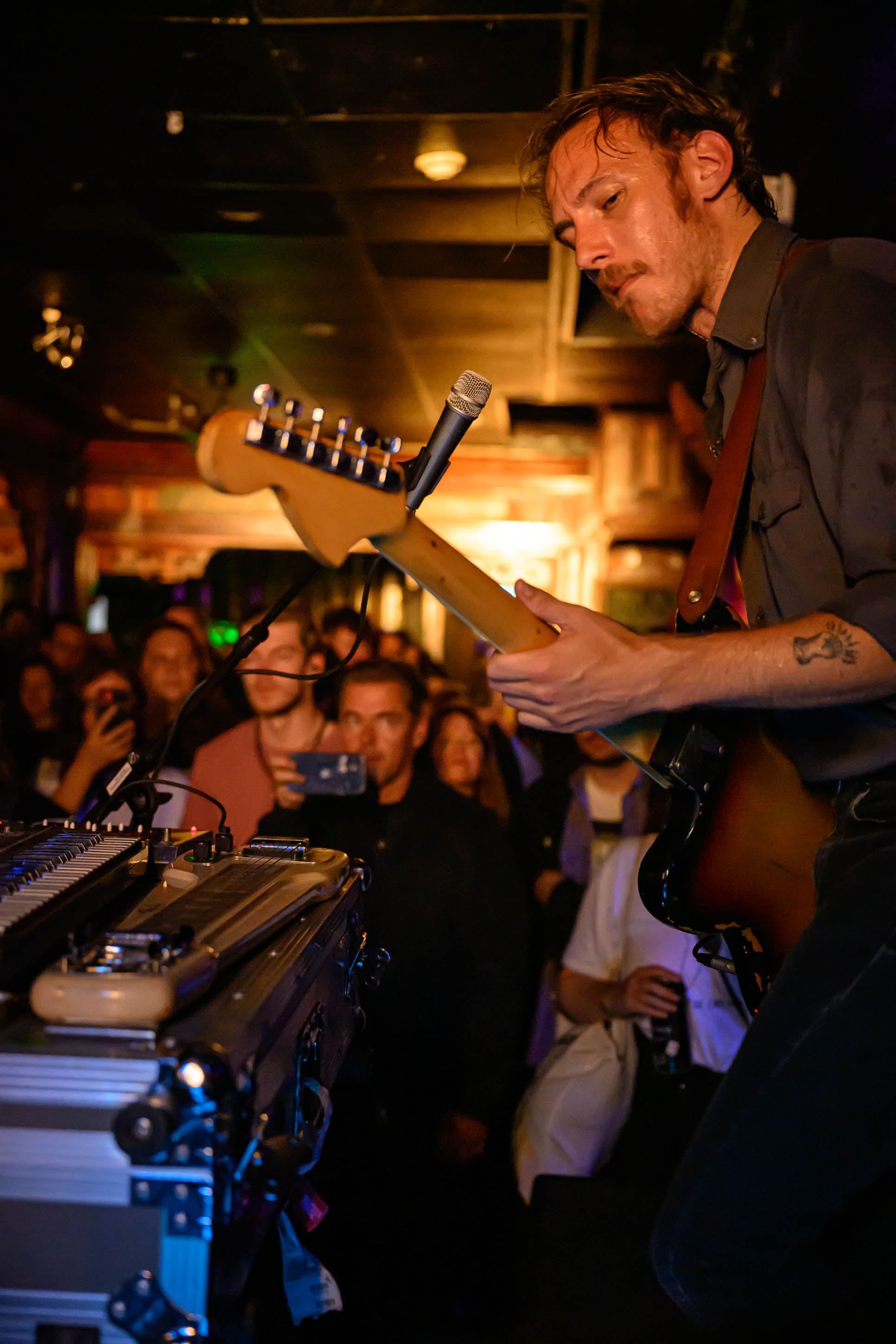
Yoo Doo Right au FME. Crédit photo : Thomas Dufresne
Quels sont vos prochains projets dans les mois à venir à part l’album avec Nolan Potter et Population II ?
Justin : On va tourner en Europe. On a un nouvel album qui est presque prêt et un autre qu’on va enregistrer cet hiver, en décembre.
Vous êtes vraiment prolifiques.
Justin : Ouais, on veut juste faire de la musique tout le temps. C’est l’une des seules choses qui nous rend heureux et qui nous apporte de la joie et du sens dans cette vie. Faire de la musique tout le temps, voyager, s’amuser.
Ma dernière question est plus ouverte : si vous deviez choisir un livre, un tableau, un film, une série, quelque chose de différent mais qui vous définit, ou que vous avez toujours en tête, ce serait quoi ? Ce n’est pas forcément une chose de qualité. En France, on parle de Madeleine de Proust, en référence à l’écrivain et à la sensation olfactive qui te ramène dans le passé, dans ton enfance.
Justin : Le livre qui m’a le plus marqué récemment, c’est un livre appeléI Burn Paris, d’un auteur polonais, Bruno Jasieński.
John : J’allais dire celui-là aussi ! Bon, j’en ai un autre en tête (rires).
Justin : I Burn Paris est un livre assez intense que j’ai souvent en tête lorsque je pense à la façon dont le monde fonctionne aujourd’hui. En plus, il a été écrit en 1928.
John : Un livre dans lequel je me suis vraiment ancré récemment, c’est The Dispossessed d’Ursula K. Le Guin. J’adore vraiment cette histoire. In fine, ça parle d’amour, de faire ce qu’il faut pour les gens qu’on aime.
Mais c’est intégré dans cette idée d’une lune révolutionnaire, d’une planète et du monde et de la façon dont ils sont connectés. C’est incroyable, c’est une histoire géniale.
Justin : John me l’a prêté à mi-parcours. J’ai six livres en cours en même temps. Je ne les finis jamais. J’ai son exemplaire de ce livre depuis environ six mois. C’en est vraiment un très bon.
Timothy : Je dirais probablement que mon film préféré, c’est le Roméo + Juliet de Baz Luhrmann.
Je suis toujours stupéfait de voir à quel point ils intègrent sans effort le langage shakespearien original dans cette ambiance à la fois réaliste et magique, dans cette ville côtière psyché californienne.
C’est une combinaison intéressante d’éléments, mais ça ne te fait jamais penser au fait qu’ils sont en train de le faire, parce qu’ils le font tellement bien. Alors tu absorbes cette concoction insensée sans réaliser à quel point c’est bizarre.
Je pense que le mélange de tous ces différents éléments et le fait d’aborder ça avec un vrai point de vue créatif, a beaucoup joué dans la manière dont j’essaie d’aborder l’art. Avec ce film, il y a une réelle volonté de dire quelque chose qui vient du cœur, ce n’est pas une approche distante.
Justin : J’aime le film Twister. (rires)
Il est vraiment incroyable.
Est-ce qu’il a bien vieilli ?
Ouais, je pense. Il est sorti en 1990… 95 ?
Tu penses que si tu le revois maintenant, il tiendrait encore la route ?
Oui, absolument. (rires)
Est-ce que vous voulez ajouter quelque chose ?
john : Je pense qu’avec le temps, on deviendra meilleurs pour faire des interviews.
Mais bon… On dit ça depuis dix ans. (rires)
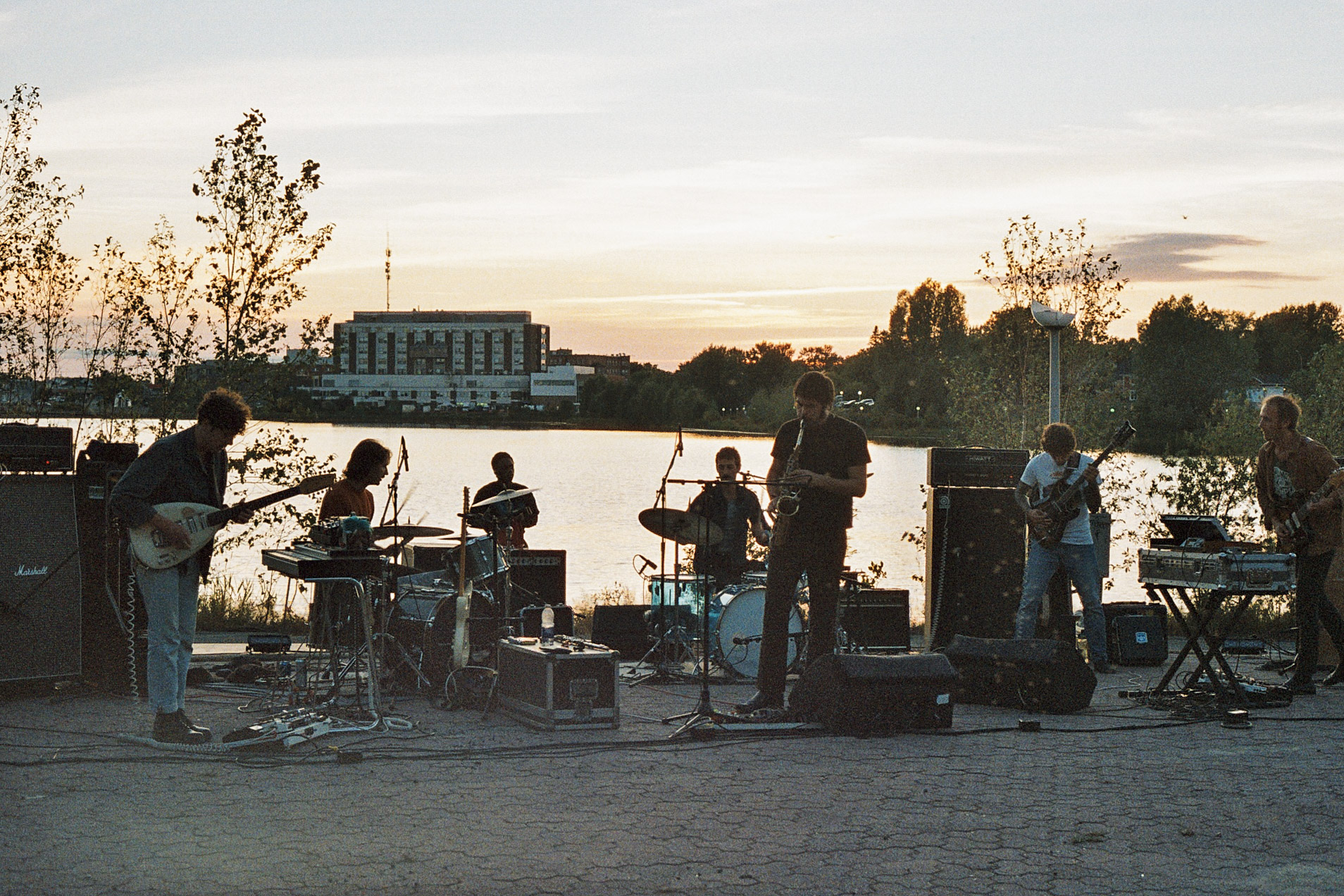
Yoo II, au FME, lors d’un show secret. Crédit photo : Marine Berger
English version
How are you doing since yesterday?
Justin (Guitar, Synthesizers, Vocals) : Good. We’re a bit tired. We partied a little.
What shows did you catch?
Justin : After Solids, we went to see Les Breastfeeders and Bad Waitress. They’re from Toronto and they’re really, really good. And Puffer. They’re awesome.
You’re getting ready for your next show in a few hours with Population II and Nolan Potter. There’s an album coming out soon—what’s the story behind it, and how did you all meet?
Justin : We’re very good friends with the folks in Population II, and we shared a house during the South by Southwest festival last spring. Nolan was an acquaintance, and he invited all of us to come make some music in his new studio. So we plugged in all our gear and just played together for a few hours, completely in the moment—nothing prepared.
Then Nolan and his friend recorded everything.
And that was really it. We didn’t think we’d do anything with it, but it turned out we’d captured something really special between us. It was just a really positive experience, and in the end, it sounded great.
Someone I know saw you a few days ago in Montreal, and said it was really intense.
Justin : Yeah, it’s really intense. But recording that album was so much fun that whenever we get together, it always is, because there’s no pressure at all.
So we’re all smiling and having a great time. The audience can feel that. The other night in Montreal, I looked around and everyone had a big smile on their face. It was just a really fun thing to do together.
Do you have plans to come to France with this album?
Justin : Maybe, maybe not. With Population II we don’t have any plans after this.
John (Drums, Percussion) : But if someone wants to bring us over, we’ll do it. With Yoo Doo Right, we’re going to France, Belgium, and the Netherlands in November. We’re playing at Le Guess Who? Festival in Utrecht.
You’ve been active in Montreal since 2016 and already released several EPs. From the Heights of Our Pastureland is your third album. You’ve worked with the label Mothland—how did you meet them?
Justin : We met them a long time ago, when they were organizing the Distortion Psych Fest. They were always putting on shows, it was a small crew.
Then Marilyn decided, with a group of friends, to start Mothland—originally just as a booking agency—and that’s how we started working together. Around the time of the pandemic, they decided to turn it into a label. Since we were already working with them, we didn’t have to fight to get on the label (laughs).
John: They really believe in us.
For this album, you locked yourselves in a cabin during a snowstorm in early 2023 and recorded everything in just three days. Did the weather play a role in the creation process, and how does your creative process usually work?
Justin: Good question.
Yeah, it was a snowstorm, so we didn’t really go outside—we were basically forced to wake up, make coffee, and play music.
My memory of it is kind of blurry, because I had an infection and was really sick. Our writing process consisted of setting up mics, playing music together, then keeping the things that felt good and developing them.
John: That was the catalyst to start the album. We wrote a ton of material, then took it all back, finished the record, and then went to record it with Seth Manchester at Machines with Magnets—and he was amazing.
What does your creative process generally look like?
Justin : It’s usually just ideas that we talk about and then explore. Sometimes it’s more developed—John might have a rhythm idea and say, “Oh, let’s do something like this,” and we build on that.
Sometimes I have a random tape recording that ends up fitting perfectly in a passage on an album, and it just works.
The result is an emotional and, now that I’ve seen you live, cathartic album. It’s both an emotional and physical experience that’s hard to explain. In that sense, your music is close to post-rock, which is also very sensory. Would you agree?
Justin : Yeah, I think we’re hesitant to call ourselves a post-rock band, especially because, where we’re from in Montreal, there’s such a rich history of that genre. And I think it’s easy to get boxed into that category. But yeah, music for us is something emotional and cathartic—we feel those things along with everyone in the room when we fill it with sound like that.
For this album, you were inspired by the commodification of art, and particularly AI. Can you share your thoughts on that?
Justin: It’s kind of a tough time for artists, especially in the way music and art are consumed. It’s very capitalist.
The commodification of art in general isn’t really something people can experience together anymore.
John: For Eager Glacier, for example, we said, “Let’s make music that’s really inaccessible, relentless, not meant to be consumed passively,” because it doesn’t really follow a concise, digestible structure. We were just mad at the world as it was showing itself.
I also see a link with the album artwork—it looks quite dark, with a storm…
John: Justin loves tornadoes; he wanted to be a storm chaser as a kid. (laughs)
Justin: It’s just an old picture of a storm, I think in Alberta, near Edmonton. It fit the theme perfectly.
And what do you think about the future of music with the rise of AI?
Justin : I don’t know. I just don’t think we’ll ever make a living doing this because of it. (laughs)
Are you directly impacted?
Justin : Probably. I don’t really know what to say about it, because I think about it a lot, and then it makes me so sad I have to tell myself, “Okay, stop thinking about it.” I try to be more positive.
At the same time, I think AI can replace a lot of things, but not the emotions of a live show.
Justin : Yeah, I think music is something that has to be experienced with people—and that feeling of unity, of being part of something together, I don’t think that’s really emphasized in the larger creative and consumption industry.
We all grew up making music with our friends and hoping everyone around us could be supported and cared for.
There’s something a bit soulless about the way things are now.
What were your influences throughout this album, and more generally?
I’ve heard names like Wes Montgomery, Neurosis, or Russian Circles mentioned—what do you think?
Justin : It’s hard to say. I think we listened to a lot of music, but we were mostly inspired by our anxiety. (laughs)
John: The record definitely came from a place of “oh no.”
It’s strange looking back on it now, but I can’t really say what was inspiring us—we just wanted to dive into the difficulty.
Justin: But musically, we have tons of influences, which makes it hard to narrow down.
John: We’re bad at that, apparently. (laughs)
You’ve worked with people who’ve collaborated with Lingua Ignota, Suuns, and Godspeed. Can you tell us a bit about that collaboration? Did it inspire your album?
Justin : A lot, yeah. Seth Manchester, who recorded our latest album, had mixed the previous one.
And we knew, when he mixed the last one, that we wanted to record the next one with him. I think that really influenced the direction we took, because we knew his work and the kind of sonic treatment he’d bring to the songs.
So we built on that. And I think his approach to recording and mixing definitely inspired this record.
He’s worked on incredible albums—he’s got such an amazing ear. He’s a very talented person.
In your songs, there are sporadic lyrics that take the pieces in different directions. How did that element come about?
Justin: Well, you can tell how charismatic I am from this interview. (laughs) I don’t really like singing or being the center of attention on stage. So it kind of comes from that—I don’t really want to do it, but John often says, “We need some vocals here.”
John: And they’re good.
Justin: I wouldn’t say I’m forced into it, but it’s something I don’t really enjoy—being too seen or heard.
I crank my guitars up loud so I don’t have to communicate with words. That’s how I communicate. (laughs)
We could see that yesterday—it was very intense because you were all so focused.
Justin : Oh yeah, we were sweating a lot.
Yes, and you were very focused—it was… I go to a lot of shows, really a lot, and it had been a while since I’d felt that, being completely drawn into it. There’s really something happening live—it was very impressive. And seeing you sweat so much—I could literally see the drops hitting the floor.
Justin (in French): il y a une certaine intensité qu’on aime vraiment bien.
By the way, can you tell me about the musician who also plays with Meggie Lennon and joined you on keyboards?
Justin : Dave joined us for a few songs. They were new ones we were playing for the first time, and we needed some help with the synths. He’s a very good friend—we’ve known him for years and always said, “We’ve got to make music together.”
Our version of playing together ended up being him holding a single note on a synth for 25 minutes. (laughs)
We love Dave—there’ll probably be more of him in the future, I hope.
John: He was sweating after the first song too. (laughs)
That’s the kind of energy you have to bring, so I said, perfect.
And how did you all meet?
Justin : Well, John had been living in Montreal longer than me, but we both came from other parts of Canada.
I had just moved to Montreal, and John was drumming in a friend’s band. I remember the band they were opening for was called Diarrhea Planet. (laughs) And I thought, “Wow.”
I had just moved to Montreal, I really wanted to make music here, and when I saw John play drums, I thought, “We have to make music together someday.”
It’s weird—that was ten years ago.
John: And Tim is brand new. He joined the project a few months ago. He’s picked up the torch and filled in the gaps lately.
We had our first show with him on bass a month ago, in the Yukon.
Justin: We originally met because we were really into music gear.
John: I bought a cabinet from him, almost eight years ago now.
Justin: Oh wow. And we’ve kind of always known each other through that gear world.
What you’d call “rig lords” or “tone lords.” (laughs). It just felt natural. And Timothy loved writing music, so we were like, “Hey man, you know how to make music—let’s do this together.”
What are your next projects in the coming months, besides the album with Nolan Potter and Population II?
Justin : We’re going to Europe for a bit. We’ve already got almost a new album ready—another one we’re going to record this winter, in December.
You’re really prolific.
Justin : Yeah, we just want to make music all the time.
It’s one of the only things that makes us happy and brings us joy and meaning in this life.
We just want to do it—make music all the time, travel, have fun.
My last question is a bit more open: if you had to choose a book, a painting, a film—anything—that defines you or stays with you, what would it be? It doesn’t have to be something “highbrow.” In France we say a “Madeleine de Proust,” do you know what that means? It’s from writer Proust—it refers to a smell or sensation that takes you back to childhood or the past. So yes, a book, a movie, a series, a photo, an album—whatever you want.
Justin: The book that struck me the most recently is called I Burn Paris, by a Polish author.
John: I was going to say that one too! Oh, I’ve got another one then, it’s fine. (laughs)
Justin : I Burn Paris is a pretty intense book, and every time I think about how the world works today, I often think back to it.
But it was written in 1929, I think.
John: A book I’ve really connected with recently is The Dispossessed by Ursula K. Le Guin. I really love that story.
Ultimately it’s about love, about doing what’s right for the people you care about.
But it’s all wrapped up in this idea of a revolutionary moon, a planet, a world, and how they’re all connected.
It’s incredible—it’s such a great story.
Justin: John lent it to me halfway through. I’ve got like six books going at once. I never finish them. I’ve had his copy of that book for about six months now. It’s a really great one.
Tim (bass) : I’d probably say my favorite movie is Baz Luhrmann’s Romeo + Juliet.
I’m always a bit amazed at how seamlessly they weave the original Shakespearean language into that kind of real yet magical, psychedelic Californian seaside setting.
It’s such an interesting mix of elements, but you never think about the fact that they’re doing it, because they do it so well.
You just absorb this insane concoction without realizing how weird it is—without even thinking about it.
I think that blend of all those different elements, and approaching it with a genuine creative perspective, has shaped the way I try to approach art. With that film, there’s a real desire to say something heartfelt—it’s not detached.
Justin: I love the movie Twister. (laughs)
It’s really amazing.
Anything you’d like to add?
John: I think with time, we’ll get better at doing interviews.
But also—we’ve been saying that for ten years. (laughs)
 Fréquence O
Laisser un commentaire